Showing posts with label travel. Show all posts

Thursday, April 12, 2012

Time preference and the wealth (or poverty) of nations


A few hours ago, I was sitting in an airplane after it had just landed and observing the people taking their belongings from the overhead compartments and proceeding towards the exit. Everyone was very polite. Some people who had fewer things could have rushed forward, but they did not.

The cause of this politeness was patience (among other factors). In other countries, like some Western European countries, or Russia, or Israel, people might be pushing and behaving aggressively. One of the reasons for this difference, I think, is cultural predisposition to time preference -- a need for an instant gratification vs. ability to put things off.

A recent article by a Harvard economist hypothesized a link between the wealth of nations and the languages they spoke -- in particular, whether they spoke a language in which the future tense was definitively expressed (e.g., "It will rain tomorrow") or one in which the future tense was expressed as a form of the present tense ("It is raining tomorrow"). The article was very bad mainly because the data contradicted it. For instance, English-speaking countries tended to be the richest in the last few hundred years. On the other hand, while modern Germany is relatively stable, Germans have suffered one of the worst inflations in the world's history in 1930s. I.e., there simply is very little correlation.

But the premise of the article is correct. Time preference is an extremely important factor contributing to the wealth and prosperity of nations. Nations in which saving and investing are valued over spending tend to prosper more. Not just the nations. Many know of the famous experiment in which children were given a choice: to eat a marshmallow right away or wait for ten minutes and get two marshmallows. Most children chose to eat a marshmallow right away. Some were able to wait. Some time in future after the experiment, researchers tracked down those children who had now grown up. Those that had been able to wait (who had low time preference) did much better in their personal and financial lives that those that had needed the instant gratification.

High time preference can lead not only to economic ruin, but also to health problems associated with overeating or addictive behaviors. It can also lead to crime: a study has shown that most criminals have tendency towards high time preference.

Interestingly, most governments do too. (Well, as someone who considers all governments essentially criminal, I am not surprised.) By their nature, governments tend toward "quick" solutions to problems. Slavery? Let's invade the South and spend hundreds of thousands of lives. (The so-called Civil War remains the bloodiest American conflict. Never mind that most European nations got rid of slavery through peaceful means, driven by changing economic conditions. Not to mention that the result of the so-called Civil War was freeing the slaves but enslaving the free for the next century and a half to come. American Republic was essentially destroyed by Abraham Lincoln.)

Poverty? Let's tax the rich and give money to the poor. Poor education? Let's give more money to the schools, make it difficult to expel students, make teachers have greater assurance in tenures. Poor people can't afford medicine? Unsafe working conditions? Long hours? Traffic accidents?

All these problems have very effective solutions that markets can provide. The only thing is: one must wait for them. Sometimes they may take years or even a few decades. But, it's worth it. Because the solutions will truly improve everyday life and will be a real increase in the lifestyle, an advance in civilization.

All government solutions, on the other hand, seem like they might solve the problem right away, but: a) they almost never do (in many cases they make the problem worse), b) they create a lot of side-effects in a form of perverse incentives and unintended consequences.

So, one can wait for the markets to come up with solutions to low wages (accumulated capital will lead to expansion of industry, which will lead to an increased demand for workers, increased competition for the workers and thus increasing salaries), or one can pass minimum-wage laws, which effectively increase the unemployment among the low-wage earners. (If hiring a worker X will give me profit of $5 and hour, but the minimum wage is $7 an hour, I will not hire anyone from this group of workers. So, instead of helping the workers who were earning "only" $5 an hour, the government made them unemployed. On the other hand, had the government waited, I would have maybe invested capital, increased efficiency of production, increased marginal profit from hiring a worker, and increased each worker's salary. If I decided not to, competition with other business owners who were doing the same thing would force me to do that or lose my employees and much of the profit.)

Any time you hear of some social ill and the proposed solution that uses government's coercion, think of this idea. The government is nothing but a crack addict's quick dose that does not help the problem at all; it makes it worse, makes the real solution more distant, less likely, and more difficult, and introduces a lot of side effects (which in turn need to be solved... and the cycle continues).

And, as a little bonus, this is the kind of people that made American great (can you imagine this kid as a bureaucrat?):

Thursday, August 27, 2009

Russian problem — Russian solution.

Background: While driving along the road, sometimes a Russian driver wants to eat some peaches. To do so, he can stop and buy some from a local old lady selling them along the road (with regular intervals — not just pears, all kinds of stuff).

Problem: After sitting in the heat the whole day, the peaches become hot. A driver wants to eat cold peaches.

Solution: Put the pears in a plastic bag; hang the bag on the rear-view mirror, over the A/C vents. Turn the A/C on max. In a short while you’ll have cold peaches.


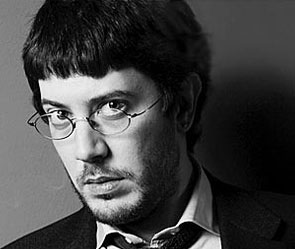
[via Artemiy Lebedev]

Monday, December 22, 2008

Chanukah ma’amor: Mem-gimmel — Tannu Rabbanan — Ner Chanukah; driving through snow


(the proper shape of Menorah — with straight branches)

I am happy to say I drove safely through beginning of snow storm to spend Shabbos by my rabbi; then was able to dig out my car, as well as his and his son’s (with whom I had some interesting conversations). Apparently, I left one of the windows in the car a little open over Shabbos (during the snow storm). No permanent damage. Then, today I drove to NYC (in the morning) and (tonight) back. Yes, I am crazy. But maybe one of my relatives lit a menorah tonight as a result of my trip (no, that wasn’t the whole point of the trip — I wish…).

Meanwhile: a good ma’amor to learn during the Chanukah. The topic is one of my favorites: “Ani Hashem Loi Shanisi” (I, G-d, have not changed) — what does it mean, on multiple levels, from G-d being the Master of the Universe, causing every minute change every single second (then how does He not change?) to G-d as He is in His Essence. As usual, Rabbi Paltiel’s shiurim are full with chassidishe stories, great mosholim and nice ellucidation of deepest topics in Chassidus. The ma’amor doesn’t mention the explanations provided by Tzemach Tzedek or Mittler Rebbe (in Chapter 9 of Sha’ar HaYichud), but provides new and (in the style of Rebbe Rashab) well-structured explanations that touch more of seider hishtalshelus.

I was listening to this ma’amor tonight while driving from NYC. I-95 was fine; I-91 was OK (averaging 65 mph); I-84, however, was frozen for the most part. I could not drive above 35 mph, because my ten-year-old Nissan with its all-season tires immediately turned into a boat (something I discovered on Friday while driving through the beginning of the snow storm to my rabbi), but I could not drive slower than 30 mph, because I needed momentum to go through the snow. All the while big eighteen-wheelers were driving by (or I was driving by them, when I wanted to go faster). The separation between lanes completely deteriorated — cars and trucks were going where there was some break from ice (which would sometimes end abruptly, forcing cars to drive/float to a different “lane”).

I-90 was a little better; it started raining and got quite foggy. Unfortunately, on that portion of the highway, there seems to be some white dust in the air, which makes my windows dirty and difficult to see through. At this point, however, I ran out of window washing liquid, so I had to rely on moisture from passing cars to clean my front window.

My town was a total amechaya: completely frozen and white (in comparison to boring-grey Brooklyn); being able to drive below 30 mph without danger of being run over was nice (in fact, there were so few cars on the street late at night that it reminded me of Dickensian times with cabs plowing through the snow).

While driving on the icy interstate, a few thoughts ran through my mind:

1. Wow, this is really dangerous. Hey, look at another car by the side of the road!
2. It would suck to be an atheist right now.
3. At the same time, I feel nothing. I almost just slid into that truck while changing lanes, but I feel no emotions. This, I guess, is what adrenaline does to you.
4. [A bunch of neuroendocrinological pathways allowing for point 3.]
5. Were these roads privately owned, they would be in a much better condition.
6. Something I read in a sicho of the Rebbe. The lights of Chanukah menorah are actually a lot like Chassidus (and, lehavdil, String Theory). Here’s how:

Greeks introduced the idea of “secular Judaism”; Hellenist Jews tried to create what pretty much modern-day Israel and many “Jewish” communities throughout US are; fanatical “Orthodox” Jews battled against them (and the forces of assimilation) and created a new reality in Torah; as a result, Chanukah Menorah was lit. Today, we have nothing remaining from the Temple. Sure, certain things are done instead of services and rituals of the Temple (e.g., davening, washing for bread, etc.), but the services themselves do not exist. With the exception of lighting of Menorah. That, at least in its appearance, exists — as instituted by the Rabbonim.

Here we have the classical Chassidic idea of descent for the sake of ascent. We have Greeks defiling Jewish land, Jewish culture, religion and finally, Beis HaMikdosh, which lead, however, to creation of a new level of yiddishkeit and an aspect of Beis HaMikdosh which proved resistant to destruction of the Temple, exile, and even assimilation (Chanukah and menora remain the most popular Jewish symbols even, ironically, amongst assimilated Jews — even though these symbols celebrate the defeat of the ideas that govern these Jews’ lives).

The descent lead to revelation of something eternal existing beyond limitations of time and boundaries between darkness and light. Light within darkness itself was revealed — and this light was stronger than the light “imposed” on darkness. When you open windows and a dark room becomes illuminated, nothing about the room’s essence has changed — once the windows are closed, the room will revert to darkness. But if you reveal the light hidden within the room itself, within its darkness, then it will remain glowing always, unconditionally. This is what the coming of Mashiach, geulah and dira b’tachtoinim are all about: revelation of light within darkness. Revelation of G-d within physicality of this world.

So, tapping into its spiritual source of eternality and revelation of light within darkness, the act of lighting of Chanukah menora draws closer the light of the Menora that will be lit in the actual Beis HaMikdosh, which will be rebuilt speedily in our days, with the coming of Mashiach.

* * *

I was told today by a complete stranger to “stop torturing mice and go back to yeshiva”. I wish it were this easy. Well, maybe it is…

Thursday, December 11, 2008

London through eyes of a designer. Evolution of sign with finger


Russian designer Artemiy Lebedev posts a photo-reportage of his visit to London. As usually, most attention is devoted to garbage cans, traffic lights, mailboxes and light poles.

His previous adventures. His visit to North Korea should be looked at by any liberal, socialist or even just a proponent of bailouts. This is what you are supporting:

КНДР. I

КНДР. II

КНДР. III

КНДР. IV

КНДР. V

A people’s prison. Mamosh.
* * *

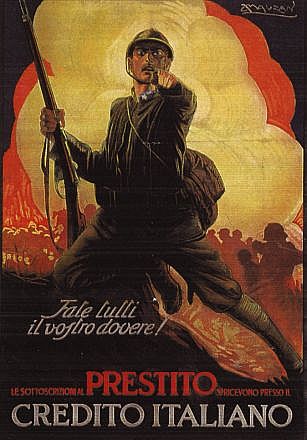
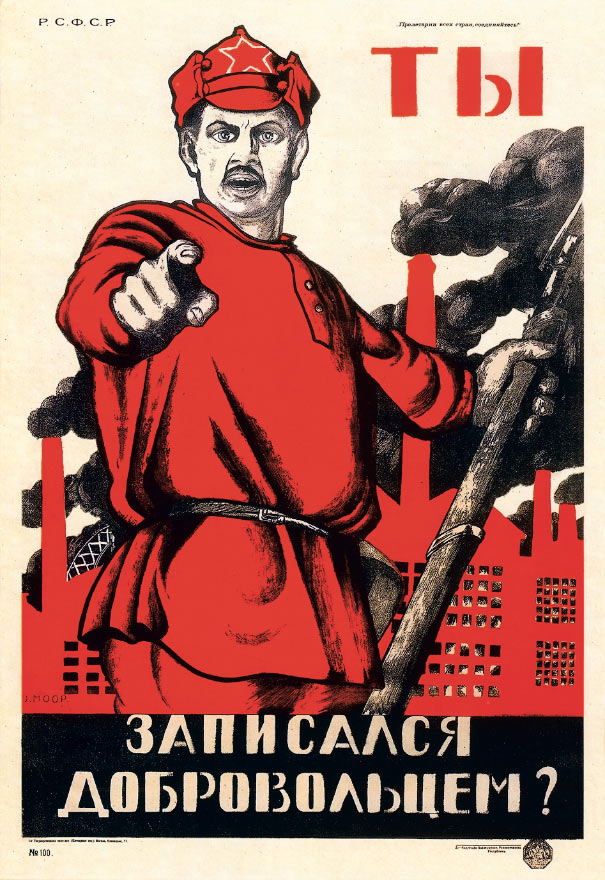
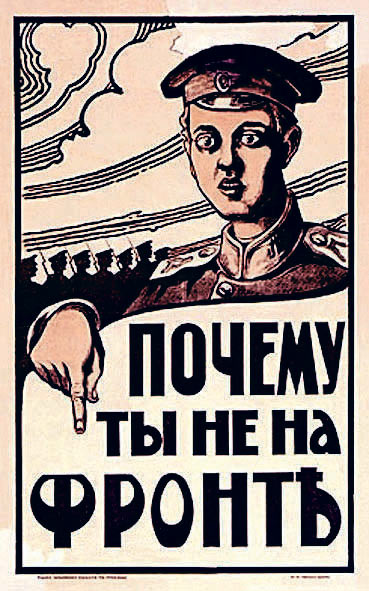
By the way, Evolution of Sign with Finger.

Compare Italian sign —


... and Red Army’s one —


... with that of Russian White Army —


Ah, the problems of Russian intelligentsia…

“It is difficult to shake off the feeling that White Army lost only because of its designers’ impotence,” says Lebedev.

* * *

Also, Lebedev pyramid. Not sure I agree that it applies to every community. Certainly some communities seem to consists mostly of upper part, while others — mostly of the lower part (take Russia, for example).

* * *

And a final thought:

http://www.crw-publishing.co.uk/images/books/978%201%20904633%2092%201.jpg
http://img.dni.ru/binaries/v2_articlepic/200725.jpg