Showing posts with label intellectual property. Show all posts

Wednesday, April 17, 2013

Intellectual property and scarcity, part 2


(If you're too bored to read the whole post, skip to the summary at the bottom.)

In the first part I have briefly outlined Stephan Kinsella's argument against intellectual property (IP) that is very popular in libertarian circles. To recap, Kinsella states that property rights exist to resolve conflicts over scarce resources. Because information is not scarce (my use of an idea does not conflict with/prevent your use of the same idea), property rights do not apply to information; in fact, they create a conflict rather than resolve one.

I said that I would outline possible objections to Kinsella's approach in the next post. It will probably take at least two posts. First, let's list the two possible metaphysical theories of information:

1. Information is a bunch of platonic objects
2. Information is patterns of matter isomorphic to other patterns of matter (I will explain below what this means)

A platonic object is a hypothetical ideal object ("ideal" as in "idea", not in "perfect") existing either in a parallel realm or as a part of our reality. Whenever we access some information through a piece of matter, we are actually observing that object, either in its "pure" form, or somehow distorted. So, if a few mushrooms are arranged in a circle, there is a platonic circle which somehow communicates with the matter of the mushroom resulting in their arrangement in an approximation of the said circle.

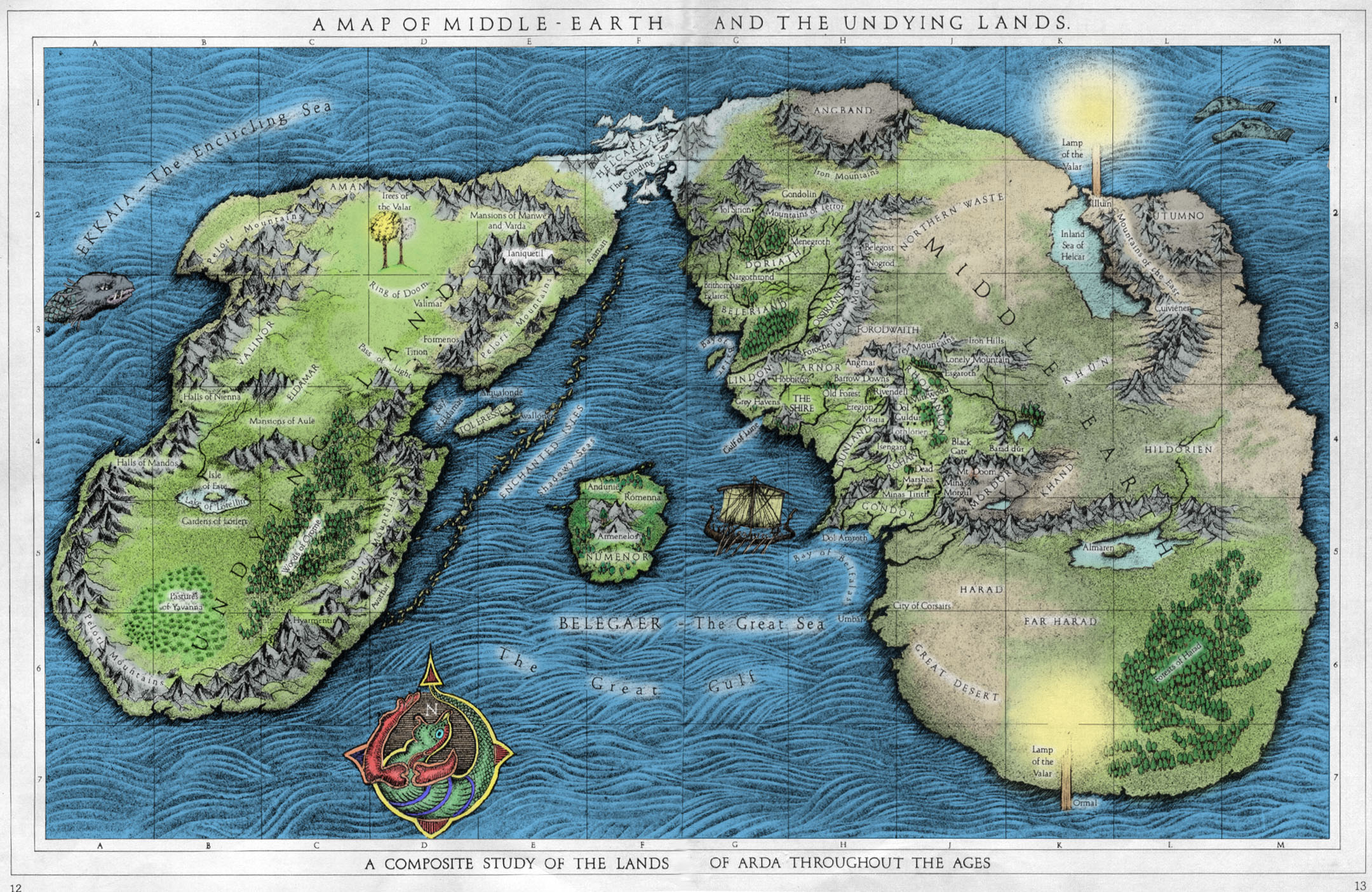
Likewise, the idea of Middle Earth is a platonic object (either created or discovered by J.R.R. Tolkien). Every time someone reads The Lord of the Rings, he accesses the Middle Earth platonic object. Likewise if he writes a novel set in the Middle Earth.

The assumption that information is non-scarce (that Kinsella and other libertarians make in their anti-IP analyses) alludes to the concept of platonic objects. Each such platonic object is non-scarce in the sense that both I and Tolkien can use Middle Earth to write a separate book (after Middle Earth has been created/discovered). Supporters of IP claim that Middle Earth can be owned by Tolkien estate. Critics of IP claim that Middle Earth cannot be owned by anyone, since nobody may exclude someone else from accessing Middle Earth, precisely because it is a non-scarce object, and one person's use of it does not conflict with another person's use. In other words, a rule that would allow such an exclusion would be both immoral and illegal in the sense that it would go against the moral/legal purpose of property rights: to prevent conflicts over scarce resources.

* * *
Here is the first part of my critique:

Kinsella's argument is based on the acceptance of the doctrine of platonic objects. But why should one do that? Why not assume the alternative hypothesis: that information is not platonic objects but merely patterns in matter not separable from matter itself? Or, if you wish, information is a series of patterns isomorphic to another series of patterns. "Isomorphic" here means "corresponding" in such a way that someone can use set of patterns A to recreate or analyze set of patterns B. For example, sequence of nucleotides on DNA is isomorphic to a sequence of amino-acids in a protein. Note that this doesn't have anything to do with human brain; cells use DNA code to create proteins all the time.

This argument is much more straightforward in that it does not require assumption of religious-like concepts like Platonic objects. If someone believes in platonic objects, let him bring forth evidence of their existence. (I will deal with a religious assumption that platonic objects exist in the next post.) Likewise, if he believes that we live in a Matrix, and all information we have is owned by some Matrix machine, let him also bring forth that evidence. Prima facie, it seems that information is nothing but patterns of matter that can either be recognized by our brains (by creating a set of isomorphic patterns in them) or not.

(The burden-of-proof argument is significant, by the way. If someone believes that platonic objects exist, he must formulate exactly what they are and how he knows about them. It may still turn out, from his evidence, that they cannot be property. For instance, if platonic objects exist in a non-material world, created by G-d, then who says they are our property? They are G-d's property. To be sure, so are all the objects in the material world, but G-d granted people rights of ownership because of the scarce/rivalrous nature of the objects. My point is: we can't willy-nilly state some theory without looking at its context.)

* * *

Significantly, this means that information is scarce. Only one person can read a given piece of information in a given book. Or, at least, it is as scarce as the carrier of the given instance of information. And someone certainly can own information -- by owning its carrier. If I bought a book from you, I now own the ideas in the book: the specific patterns of ink that create isomorphic patterns in my brain. You don't own them, because you don't own the book (since I bought it from you).

Can I use these patterns to create new patterns? (Either by copying the book or by using its fantasy-land setting to write my own book.) Why not? I am using my property the whole time. The book and information within it is my property. The new book that I am writing is also my property: I am using my paper and ink (presumably). I can sell it to anyone I want, since it's my property.

So, this analysis still argues against IP. And to me it seems like a much more straightforward approach that does not require the mental gymnastics of scarcity and justification for property rights. (Which I will deal with in the next post.) It's not clear to me why Kinsella, who is an atheist (and writing mostly for an atheist crowd) does not use it.
* * *
One can probably also criticize the platonic model as somewhat vague and incoherent. Imagine I re-write The Hobbit, replacing each instance of "Bilbo" with "Shmilbo". Is my Shmobbit the same ideal object as Tolkien's Hobbit? What if I write a novel (as has been done) from the point of view of Orcs: in which the latter and Sauron are actually misunderstood fighters for freedom against the oppression of the West? What if I write a novel whose fantasy-land setting has Misty Mountains, but nothing else from the Middle Earth? How about the Misty Mountains and a forest called Lothlórien? What if in my novel, the plot is very similar to Tolkien's (someone goes somewhere to destroy some object of power), but doesn't use the same details?

You can perform this kind of mental experiments to see that the concept of platonic objects is too vague to be used successfully as a set of rules for allocation of property. But this analysis also demonstrates that even if the universe of platonic objects existed, its anatomy would be so vague and alien to our mind that it would be difficult to determine who owns what and to what extent. It would be like owning land whose borders sometimes expand and sometimes contract.

In the next post I will try to analyze what would happen if we were to overcome the problems of figuring out what exactly platonic projects are and if we had some source (e.g., a religious revelation) that told us that all information is actually a bunch of platonic objects.

* * *

To summarize:

In the first version of critique of Kinsella's anti-IP argument, I am stating that a much easier argument would be to ask: what exactly are we owning? What is that object? Where is it?

If we discover that there is no such thing as platonic ideal objects (or their existence is subject to burden of proof), then we have to identify information with its material carriers. I cannot own contents of something without owning also its carrier. The contents of something are merely the properties of that thing.

The fact that my key fits my lock is my key's property. The unique pattern of the key's molecules is mine as long as I own the key, because it is the key. (Sure enough, another pattern on another key is that key and belong to whomever owns the key. Even if it is "the same" pattern, in the sense that it can fit the same lock or can be recognized as the same by a human brain.)

Some people may be against this attempt of "isolating" where and what objects are. But I disagree. Perhaps as a scientist, I find it important to understand the nature and ontology of some phenomenon before we deal with it.

The same goes, for example, for numbers, rights, values, tastes, truths, etc. We must identify what they are exactly before we are to deal with them.

Sunday, April 14, 2013

Intellectual property and scarcity, part 1


(who owns Middle Earth?)

I have recently thought about Stephan Kinsella's core argument against intellectual property (IP) and whether it has a hole in it. I think it might not, if certain assumptions are made, but I will try to discuss my approach to the issue. This will also be a useful review of why intellectual property makes no sense.

First, let me outline Kinsella's argument:
Nature, then, contains things that are economically scarce. My use of such a thing conflicts with (excludes) your use of it, and vice versa. The function of property rights is to prevent interpersonal conflict over scarce resources, by allocating exclusive ownership of resources to specified individuals (owners). 
(Against Intellectual Property, p. 20) 
You can read the quoted essay for more details of the argument. Here is my understanding of what Kinsella is saying:

1. Some resources in nature are scarce: they can only be used by one person at a time.

2. Sometimes two or more people will want to use the same resource and will not give way to each other. This is called "conflict over scarce resources". (The conflict can be actual, with two people arguing, or theoretical: for instance, if I see a resource and want to know whether I have a right to take it.)

3. Property rights exist (as an aspect of both law and morality) to resolve conflicts over scarce resources peacefully. NOTE: this means peacefully determining whom the resource should "belong" to. Enforcement of that decision can be violent or not.

The last point is important. Assume someone disagrees to honor a certain determination of property rights. It seems that the rights-holder has, well, a right to defend his property. With force if necessary. (Or threat of ostracism. Or personal authority.) Point is: it's moral and legal for the owner to exclude others from use of his property.

4. Resources that are not scarce don't fall under above justification for property rights. In other words: if my use of X does not conflict with your use of X, then it doesn't seem like there is any conflict. So, what exactly are property rights to X supposed to resolve? What is the justification for you to prevent me from accessing X if my doing so doesn't prevent you from accessing it?

Now, let's look at what information is. Information is a non-scarce resource. If you describe a new method for getting rid of garden gnomes or a new fantasy land, and I gain access to that information (e.g., by buying your book in a store), why should you prevent me from using that information whichever way I want with my property? (E.g., printing out instructions in my book and selling them or writing a new novel set in the same fantasy land setting.) It's not like I am preventing you from using the said information for your purposes.

One quick objection is that my activity can lure some of your potential customers away. But: therefore what? Do you own your customers? Do you own their money before they gave it to you? Certainly not. Is it a loss to the original author? Well, it is in the same sense that the fact that I cooked tonight and didn't go out was a loss to whatever restaurant I would eat out at. (And if I ate at a pizza place, that decision resulted in a loss to the deli next door.) It's a loss from the estimated potential future profits. But potential future profits were not in your possession — that's why they were "potential" and "future". So, I didn't steal anything that you actually owned.

What IP laws do, therefore, is not protect from theft of actual property. Quite the contrary: they themselves create theft (if we define "theft" more generally as "violation of property rights"; such as "borrowing without permission is theft"). If I am not allowed to use my pen, ink, and paper to write a novel in a fantasy world invented by you (or, for that matter, to distribute the book I bought from you), my property rights to my pen, ink, paper, printer, hard drive, etc., are being violated.


That is the general outline of the anti-IP argument prevalent in the libertarian circles. I will discuss my slight objection — and the potential answer to it — in the next post.

Saturday, February 25, 2012

Simple argument against utilitarianism


The following is an excerpt from Stephen Kinsella's Against Intellectual Property. Obviously, it talks primarily about the utilitarian support for IP, but this argument can be used against any use of utilitarianism. (Emphasis is mine.)
Advocates of IP often justify it on utilitarian grounds. Utilitar­ians hold that the “end” of encouraging more innovation and creativ­ity justifies the seemingly immoral “means” of restricting the free­dom of individuals to use their physical property as they see fit. But there are three fundamental problems with justifying any right or law on strictly utilitarian grounds. 
First, let us suppose that wealth or utility could be maximized by adopting certain legal rules; the “size of the pie” is increased. Even then, this does not show that these rules are justified. For example, one could argue that net utility is enhanced by redistribut­ing half of the wealth of society’s richest one percent to its poorest ten percent. But even if stealing some of A’s property and giving it to B increases B’s welfare “more” than it diminishes A’s (if such a comparison could, somehow, be made), this does not establish that the theft of A’s property is justified. Wealth maximization is not the goal of law; rather, the goal is justice — giving each man his due.
Even if overall wealth is increased due to IP laws, it does not follow that this allegedly desirable result justifies the unethical violation of some individuals’ rights to use their own property as they see fit.
Note that this is not the explanation why one may not own information he produced. For that, read Kinsella's monograph or my previous post (after the videos). I may write more about intellectual property and scarcity from Jewish point of view later.

Friday, February 24, 2012

The cost of legal fiction


Another comment from the anti-IP thread (for the first part, see this):

The law does not create rights; it recognizes them. When it recognizes the rights that do not exist, the particular law is not a real law, it is a legal fiction. Legal fictions lead to violation of other people’s rights when they are enforced.

For instance, "right" of a husband to relations with his wife is a legal fiction. It has been in place in most "civilized" countries until very recently. In the UK, until early 90s. In the US, until 70s, I think. Its enforcement led to marital rape.

[Incidentally, the Jewish Law strongly forbids spousal rape.]

The same can be said about any unjustified law. For instance, the supposed rights of a book's author to the information in the book contradict the rights of another person to his hard drive on which the electronic version of the book is stored.

Oftentimes, copyright is justified by the claim that "copyright piracy reduces the authors' sales". This argument is based on another pseudo-right, the right of the author to business transactions with his potential clients. What the copyright is saying is that the author owns other people's money even before they exchanged it for the copy of his book, which is clearly ludicrous.

Every application of law needs to be very strictly justified. The law comes in and tells a person what to do or not to do with his hard drive, with his house, with his car, with his body, etc. -- or else (it threatens with force and violence in the case of non-compliance to the law).

It better have a good justification for doing that. One justification I see protection of other people from violation of their rights. In case when this does NOT apply, the law is violating this person's rights needlessly.

That is why the whole approach of "every law is moral unless proven otherwise" is wrong. Every law is immoral unless proven absolutely necessary to protect other people's rights. That is why people who hold to my point of view (which includes the Founding Fathers and approximately one Congressman today) hold to the idea of a limited government.

This is all simply from the moral, rights-based perspective. In reality, as it is usually the cases with most unethical laws, copyright harms the society by stifling creativity and competition and increasing copyright-related lawsuits. History shows that in such areas as art or music, creativity flourished the most during the periods when works of intellect were not protected by monopolies.

Friday, May 14, 2010

Tuesday, May 11, 2010

Stephan Kinsella on Intellectual Property


Mr. Kinsella discusses the opposition to Intellectual Property from libertarian point of view and gives a general introduction of what Libertarianism is.

Ignore the anarchist vs. minirchist stuff. Focus on intellectual property argument. Hear him until the end. I genuinely believe he makes sense after having listened to his essay.

See also an excellent essay “Against Intellectual Property” by Mr. Kinsella (also available as a series of audio-lectures for those who don’t have time to read).

Friday, January 23, 2009

Discussion of copyright law with Stephen Colbert

Mises Economics Blog has declared a war against Intellectual Property (IP) rights as non-rights and immoral utilitarian invention of totalitarian statists. For instance. Or this.

OK, lots of long words there — the thesis is: you can’t have a right to an idea. It’s non-scarce. Period. And all the claims that lack of IP will stifle intellectual creativity are disproved by successes in such industries as fashion or book industry still reprinting Dickens. And even if that were true that the intellectual creativity would be stifled, one still cannot violate people’s rights to their own property for the utilitarian reasons (that’s what socialism does — and… you know… bad!).

If you say you own an idea, what does this mean? You wrote a poem, and I memorized it. Do you own the memorized poem as it exists in my brain? If you do, you own my brain, which is impossible (unless we live in the Soviet Union, North Korea or France). So, how can you own an idea?

Or do you mean, perhaps, that your poem exists objectively, outside our minds, as some kind of Platonic abstract idea, which I always access in order to be conscious of this idea and think it? I.e., the idea is a resource which you own. Well, buddy, here is news — you can’t have rights to a non-scarce resource.

That’s basically their argument.

I personally am still researching the subject. (Well, when I say “researching”…) I have to say, I don’t completely understand the utilitarian part of it, even though I agree that it shouldn’t matter from ethical point of view.

In any event — a funny interview:


A bit disorganized and also utilitarian in his thinking (he seems liberal based on his gasoline comment, so I wouldn’t be surprised), but I think the point with e-Bay made some sense.

______________
© Copyright — No part of this or any other posts on this blog may be reproduced without Crawling Axe’s permission. And even then, he reserves the right to dislike you.