Tuesday, January 29, 2013

Adolescence

Inspired by this FB meme:

Photo

Interesting argument: that adolescence is basically a modern construct forced upon the teenagers who would otherwise grow up much faster. So, kids are stuck in this weird limbo, where their normal neural development tells them to start becoming adults, but in their lives they are forced (by the parents and the society) to remain kids. Result: the rebellious (or "troubled") teenager phenomenon.

Historically, people behaved like adults right after the start of puberty. In Jewish communities, people would get married at 14. (Both boys and girls. The founder of Chabad movement, Alter Rebbe, got married at 16.) People just state the fact that "teenagers of today are not like the teenagers of back in the day", but where did this dichotomy come from? Furthermore, we see now even 30-year-olds who behave like teenagers. (I won't mention our government and its spending habits.)

Now, since I am a libertarian, I have to blame the government, right?.. :) Well, when the government made it its job to protect kids from "harsh realities of everyday life" (read: adulthood) like working and defined "childhood" as "before 18/21", it created this phenomenon.

Right? If someone is going to become an adult at the age of 14-15, he has to be able to get a job, get his own apartment, marry, drink, smoke and do whatever he wants, taking full responsibility for his life and be treated as an adult (which includes equal respect for his freedoms) both by his parents and the society.

But if he can't get a job (and minimum-wage laws don't help: they tend to increase unemployment among the lowest-paid wage earners, since the minimum wage is now above their marginal profit for the employers), he is forced to live with his parents. And, of course, "my house, my rules". Adulthood out of the window.

He has all the exact desires (all the same "pursuits of happiness") as all the adults. He wants to make his own choices in education, employment, hobbies, recreation, and relationships. But the society forbids them to him (through its social norms or its laws). If he is free-spirited (read: adult) enough to pursue them, he is labeled as a rebel or a criminal.

Note how kids who grow up on the street tend to be more adult in many areas than the kids who live with their parents until they go away to college. These 14-year-olds have to survive and support themselves (and, sometimes, their little siblings). Those come home to a cooked dinner and then go to their rooms to their playstations. (Also look at the 18-year-old shluchim and shluchos who go to Taiwan or India or Madagascar and start their own Chabad Houses, creating communities around them. Most Americans look at them in awe. I've heard many 30-year-old women say: "I could not run a Chabad House and take care of two kids the way that Chaya [21 years old] does.")

I am not arguing that we should throw the teenagers on the street. Just like I am not arguing that we should throw 18- (or 25-) year-olds on the street. My point is that if the society recognized teenagers' equal legal/societal rights and offered them employment opportunities, they would "grow up" just like the kids living on the street. Except they would not be living on the street; they would be doing all the jobs that modern college kids do and living in cheap apartments with roommates.

What about education? First, I don't think the current "education program" is for everyone. People should be free to choose work or education at their own pace. But even for those destined for the school–college (–Ph.D.?–post-doc?) career, living on their own (and supporting themselves through work, internships, or scholarships) should be a choice. For that, again, we must abolish all economic measures that limit teenagers' employability (minimum wage laws, etc.) and recognize their equal legal rights to everything.

Not to mention that the government-funded mass education facilities very likely exacerbate the problem. I've gone to a public high school for three years (my 13th to 16th years of life; most Americans' 14th to 18th). Quick description: feed-forward cycle of idiocy. Teachers treat students as idiots; the students behave as idiots and treat teachers as idiots. And the cycle continues.


Bottom line: you want the teenagers to grow up? Start respecting them as adults.

Sunday, January 20, 2013

Police: a privileged class?

I have been lagging somewhat recently in my posts, expressing most of my ideas through Facebook. Since I find my blog to be a better place for consolidating my thoughts in the long run, however, I will try to start posting here more.

Here are some ideas regarding the police enjoying a status of a special gun-wielding, law-breaking elite:

First, a quote:

"The police are the public and the public are the police; the police being only members of the public who are paid to give full time attention to duties which are incumbent on every citizen in the interests of community welfare and existence." — "Sir" Robert Peel

A link: "Are You a Feudalist?" A rather good article in which the author discusses not only the history of freedom and equality in the English-speaking world but also draws parallels between the modern world and the feudal society.

My thoughts on the article:

There is no reason why police or the army should have special privileges over the citizens. The idea that police should have special rights or privileges is absurd.

The same goes for the government. It is incumbent on every person to live according to law: i.e., a peaceful way of resolving conflicts with his fellows. The "government" should be nothing else but people whose full-time job is to figure out what the appropriate ways of peaceful conflict resolution are. Just like professors of linguistics try to figure out what the proper way of spelling words is, such that people understand each other the best.

And another repost from the Facebook:


I have read some guy on Reddit say this:
Let's assume that an assault weapons ban is unconstitutional and infringes your right to self-defense. However, it doesn't completely eliminate your right to self-defense—you can certainly defend yourself in the vast majority of situations with a shotgun or a handgun.
My response (first line shamelessly stolen from some meme):
Rosa Parks had other seats on the bus to choose from. 
Self-defense is a natural right. Not something granted by the Constitution as a civil right. Any prevention of any means of self-defense is a violation of that right. Who cares how big or small? If we had slavery only on Wednesdays, as opposed to full slavery, would you oppose it? How about once a year? How about once ten years? And don't tell me that doing whatever you want with your body is a more fundamental right than living. 
I draw the line at WMDs. Not because 'that's just nuts, dude' (which is the argument people use against ownership of machine guns), but because use and storage of them endangers everyone else. 
But then, the government should not have them either! Not because they are less safe in its hands, but because the government draws its rights to do something from our rights. The government has no rights a priori (unlike us, the sovereigns). We delegate to it our natural rights. 
Which us also why if you're going to forbid people to own a certain kind of weapon, forbid it to police and army too. I'm not being funny. There is an article on Reason quoting NY police chief saying that having only ten bullets at a time in their magazines will limit police officers' ability to defend themselves and others effectively, while leaving the criminals with full magazines. No shit!..
Now, if you're wondering what are these magical natural rights that I keep talking about... well, I am wondering the same thing. I have been thinking about the nature of natural rights (no pun intended) and will try to organize my thoughts in a post in near future (bli neder).

Meanwhile, if you're in a mood for quick senseless British humor, enjoy this:


Monday, January 14, 2013

On connoisseurs

Connoisseur


I dislike severely when my Russian friends or family members look down on someone for having gaps in what they consider "general knowledge".
"You've never read Hemingway's Man and the Sea? You never opened The Catcher in the Rye? How can you call yourself an educated person?" 
"Well, you don't know all the parts of RNA polymerase. You couldn't tell a good Japanese woodblock print from a bad one. Not to mention your complete ignorance in mating behavior of kakapo parrots."
"How can you even compare?.. Hemingway!.."

Thursday, January 10, 2013

Why have laws at all?

I just saw this image on the Facebook:


Ironically, this is an excellent argument against any kind of victimless prohibitions. ("Ironically", because obviously this is not what the author of the meme meant.) Yes, banning guns only gives them into the hands of criminals. The same with banning drugs or prostitution. As a result of the government banning stuff, there is a whole necessarily shady element of society out there doing things that we have banned... Banning alcohol creates Al Capone. Banning narcotics creates Columbian drug lords. Banning prostitution creates violent pimps.

So, what's the point of the laws? Why do we have them at all?

We have laws for peaceful resolution of conflict. For instance, if I play music loudly late at night, this creates a conflict between me and my neighbors. A law will create a clear boundary that will demonstrate who is violating whose rights. (This law can come from a legislative monopoly like we have today or from independent competing experts selected for by the market.)


Note that in here I am talking about civil laws. Laws created by the people for the people. I.e., laws that everyone agrees on for everyone's prosperity. Not "take of your shoes when entering my house" kind of laws. For distinction between the two, see this post:

Modern States and Dina D'Malchusa Dina

Sunday, January 6, 2013

On MMT

An acquaintance of mine on Facebook asked me to comment on his proposed social policy based on MMT (an economic theory). The proposal, the way I understand it, basically comes down to: let's print money and spend it on the “infrastructure", which will be a good long-term investment for businesses able to take advantage of the improvements and a good short-term “boost" to the economy, since it will increase spending and stimulate businesses.

Well, where to begin?

Let's break the problem up into two parts: first, figure out the problem with the government spending resources and then the problem with printing money.

1. Imagine that a bunch of space aliens came over and offered to help rebuild some city's infrastructure or just some businesses. They are providing building materials and manpower. We are providing the management. Who should manage the improvements: the government or the private sector?

Misesian calculation problem theory explains that centralized monopoly will always perform worse than many decentralized competing companies. First, no single entrepreneur can predict what the public will want and how to distribute the resources as well as many entrepreneurs trying out things together. Just look at the modern smartphone market. Apple products may be good, but they are not the only good thing out there (and they are partially good because they were able to take advantage of the success of other companies in some aspects of those companies' products). The only way that Apple knows that its products are good is by comparing them to other companies' products and by seeing in which way other companies succeeded.

Second, if a company is isolated from profit and loss mechanisms, not only will it not have incentive to improve and cut losses, but it will not have any way of knowing whether it's doing well or badly, since there is nothing to measure its success (in providing the public with  the desired services) in. Plus, isolated from the competition, again, it will not know whether it could have done something better in a particular area.

This is why, as I said, a bunch of competing companies will always do anything better than any monopoly, including the government. Plus, as the story with Obama's spendulus showed, government's spending always has a lot of internal inefficiency and corruption (something also possible for any individual company out there, but controlled for through competition with the other companies).

So, clearly, allowing the government to manage the aliens' limited resources would be a worse choice then letting the private sector bid for the pieces of the offer, using its entrepreneurial insight to seek out what improvements in the society the public truly wants.

This is an important point: a government building a highway may be of benefit to some people. But is this truly the best use of the taxpayers' money? Why not let the taxpayers decide themselves on spending their money on what the private sector has to offer? And, if an entrepreneur predicts that what the public will really want is a bridge, he can borrow money from a bank (not one guaranteed success by the FDIC, but one also competing with its brethren on a free market), buy the land, build the bridge, and collect tolls. He will compete for people's money not only with the owners of other bridges, but also with the owners of other local businesses. This way, the public truly decides where its money goes, and without any coercion.

When we let the government make this decision, not only are we letting it force people regarding what to spend their own money on, but we are (foolishly) assuming that a bunch of bureaucrats are better than private entrepreneurs and bankers at the latters' job.


But, what my friend proposes is even worse. His proposal does not take offered help from the space aliens and give it to the government. It takes resources from the private sector and gives it to the government (to misuse). If you read nothing else, read this:

There is no difference, in terms of distribution of resources, between a) the government coming in and taking human labor and building materials by force, or b) taxing the businesses and using the taxed money to hire humans and buy building material, or c) printing money and doing the latter. The total amount of resources in the society at any given moment is fixed. By printing money, the government still "sucks in" some of the resources that would have otherwise been used by businesses to do something else (better): not only because it hires some workers away and increases price on supplies, but also because it devalues everyone's savings by debasing the coin.

And this brings me to my second point:

2. Why is printing money itself a very damaging act? Well, a few reasons:

a) as mentioned above, it devalues everyone's savings;
b) it motivates people to spend, rather than save, thus shifting the distribution of resources without any good reason for it (again, the government is acting as a central planner, and it is a priori bad at it);
c) increasing the amount of money in circulation alone (without any additional efforts by the government) without any "natural" increased demand for money from the markets creates malinvestment bubbles.

I won't reiterate the last point and explain Austrian Business Cycle Theory for the Nth time. I will just link you to the previous post, where I have done so or linked to works by Bob Murphy, Murray Rothbard, and others who have explained the theory:

Why Did Solyndra Fail?
Why Stimulus Failed
Activating Trash

Inflation and Roman Empire

Or you can just read this brilliant work by Doug French:

Early Speculative Bubbles

Also, here is an interesting excerpt from Ludwig von Mises's Human Action that demonstrates the above point (that increasing money in circulation causes artificial booms):
The main deficiency of all attempts to explain the boom — viz., the general tendency to expand production and of all prices to rise — without reference to changes in the supply of money or fiduciary media, is to be seen in the fact that they disregard this circumstance. A general rise in prices can only occur if there is either a drop in the supply of all commodities or an increase in the supply of money (in the broader sense).
Let us, for the sake of argument, admit for the moment that the statements of these nonmonetary explanations of the boom and the trade cycle are correct. Prices advance and business activities expand although no increase in the supply of money has occurred. Then very soon a tendency toward a drop in prices must arise, the demand for loans must increase, the gross market rates of interest must rise, and the short-lived boom comes to an end.
In fact, every nonmonetary trade-cycle doctrine tacitly assumes — or ought logically to assume — that credit expansion is an attendant phenomenon of the boom. It cannot help admitting that in the absence of such a credit expansion no boom could emerge and that the increase in the supply of money (in the broader sense) is a necessary condition of the general upward movement of prices. Thus on close inspection the statements of the nonmonetary explanations of cyclical fluctuations shrink to the assertion that credit expansion, while an indispensable requisite of the boom, is in itself alone not sufficient to bring it about and that some further conditions are required for its appearance. 
Yet, even in this restricted sense, the teachings of the nonmonetary doctrines are vain. It is evident that every expansion of credit must bring about the boom as described above. The boom-creating tendency of credit expansion can fail to come only if another factor simultaneously counterbalances its growth. 
If, for instance, while the banks expand credit, it is expected that the government will completely tax away the businessmen's "excess" profits or that it will stop the further progress of credit expansion as soon as "pump-priming" will have resulted in rising prices, no boom can develop. The entrepreneurs will abstain from expanding their ventures with the aid of the cheap credits offered by the banks because they cannot expect to increase their gains. It is necessary to mention this fact because it explains the failure of the New Deal's pump-priming measures and other events of the 1930's. 
The boom can last only as long as the credit expansion progresses at an ever-accelerated pace. The boom comes to an end as soon as additional quantities of fiduciary media are no longer thrown upon the loan market. But it could not last forever even if inflation and credit expansion were to go on endlessly. It would then encounter the barriers which prevent the boundless expansion of circulation credit. It would lead to the crack-up boom and the breakdown of the whole monetary system.

A ma'amor summary

GYROCOPTER | BY AUTO GYRO | Image

First, I changed my mind on moving to Tumblr.

Second, here is a ma'amor summary I wrote on Facebook:


Alter Rebbe says that people nowadays (meaning 18th/19th century — but this is true also today) think that the philosophers of old were fools. It is the philosophers of today that were able to develop wonderful new technological advances (the Alter Rebbe gives examples of cannons and air balloons) that are the geniuses.

In reality, he says, it's the opposite. People of old were geniuses, but they dealt with inyonim ruchniim — spiritual matters, or abstract concepts. The reason was that it was important to mekadesh (to make holy) the world from top to bottom. That is why the wise of the nations dealt with the abstract concepts, so that Yidden could mekadesh those concepts through their service.

Nowadays, the time has come to mekadesh the gashmius, the lowest aspects of the physical matter. This is why around the time of 17th-19th centuries, there was a revolution both in Chassidus (the ideas in Judaism that explain how dealing with physical things for the purpose of holiness creates "dira b'tachtoinim", Dwelling in the Lower Worlds for G-d) and in material sciences (natural sciences, medicine, economics, etc.) that allowed for more of the physical matter to be in use by the humans, more efficiently, and with greater benefit for the humanity. And economics is very important for this, because it allows literally the whole world to participate in creation of a single pencil.

Now this pencil (or an iPhone or an airplane) can be used for humanity's benefit and for avoidas Hashem. Through study of Chassidus, we are able to elevate the sparks even in the lowest aspects of the matter. Through study of natural sciences, we are able to make those aspects of the matter accessible for elevation. Furthermore, study of the world itself, combined with Chassidus, allows us to understand the greatness of G-d to a higher degree.

Tuesday, January 1, 2013

Moving to tumblr (maybe)

I am considering moving to Tumblr. I like its interface, and it seems to have more people on it than the Blogger.

Here is the link to my blog there: flyingaxe.tumblr.com If you want to follow me there, please subscribe or follow.

I will gradually import all my posts from this blog to the one on Tumblr. (There seems to be a limit on the number of daily posts. So far it has synchronized through the middle of 2009.)

I will still leave this blog on. I will potentially post on both Tumblr and this blog if I find a way to synchronize the two blogs, but I would like Tumblr to be my main place of posting for now. (Of course, I may become disillusioned with it after a while. This is still only an experiment.)

Thursday, December 27, 2012

The responsibility to refuse


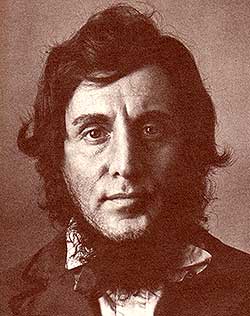
(Thoreau is one of the most famous Americans to have argued about the importance of public disobedience to immoral laws. He also looks a bit like the Soviet Sherlock Holmes.)

I have just read an article about the Israeli soldiers' right to refuse to carry out their superiors' orders to throw out settlers of their homesteaded homes. Some have claimed that such refusal undermines the fabric of Israeli democracy.

The author argues that every citizen of a democracy has a right to refuse the government's laws. I say that he has a responsibility to do so when the laws are immoral.

A couple quotes:
'Do not individuals have the right, indeed the duty, to question the morality of their governments’ decisions? 
The worship of the government is fascism, or as Rabbi Joseph Soloveitchik wrote, “the enslavement to the state can also become idolatry.“ [...] 
In Western philosophy, going all the way back to Socrates, civil disobedience to immoral law is perceived as a fundamental protection of democracy and a means for defending the rights of the minority from the tyranny of the majority. 
Following the Second World War and the Holocaust, the Nuremberg Trials were obvious proof that obeying immoral orders is immanently immoral, as the Nazi leaders were executed for obeying laws. The civilized world had expected them to disobey these laws, regardless of the legal consequences or peril to their own safety.'
And let no idiot mention Godwin's law.

Wednesday, December 19, 2012

On banning assault rifles


Our Supreme Commander in his infinite wisdom has declared that he supports a ban on assault rifles (owned by the peaceful populace; the ban obviously does not cover the government thugs).

The argument boils down to this: let's prevent random lunatics from shooting children with handguns by... taking assault rifles away from homeowners. Who successfully use them to stop home invasions. (By the way, home invasion attempts are lower in the US than in Canada, for example.)

So, is our President an idiot or a political whore?..

Probably both, but one can probe deeper here. Assault rifles can be used to defend against home invasions — not only home invasions by local hoodlums, however, but also by federal agents. And they have been used successfully in the past to this extent; federal agents have been wounded and killed in unlawful home invasions, and the home owners were cleared of charges.

Of course, this is just a tip of the potential iceberg. In a country where the populace is armed with assault rifles, the government is scared. As in Switzerland, for instance. American Government would hate for this to happen (or continue happening) in the US. Hence the proposed ban on assault rifles, under the pretext of caring for the kids.

It's not paranoia when someone is out to get you...

Monday, December 17, 2012

Traffic lights


"Without the government, there would be no traffic laws and major accidents on every intersection."
— most statist fools


Watch this video and weep. On the left: traffic lights off during a power outage. On the right: back on, the next day (filmed at the same place, same time).

Or, in other words, left: libertarianism; right: statism.


This is not to suggest that we'd have no traffic laws in a stateless society. The point of the above video is that nothing is better than whatever the government has to offer and that "nothing" in most cases amounts to a spontaneous order due to the forces of mutual cooperation and pursuit of self-interest.

Under stateless society, all roads would be privately owned, and it would be up to the owner to create traffic laws and regulations (in the form of signs, traffic lights, etc.). Different road owners would compete with each other for the public's custom (passage through their roads, paid for automatically and electronically — price also kept low by competition). The competition would allow improvement in the quality of roads and traffic regulations (in terms of clarity, balance between safety and efficiency, etc.).

Another example, from England:

Tuesday, December 11, 2012

Swiss cheese

Why Does This Guy Have an Assault Rifle at the Apple Store?

I read two interesting articles today that made me want to emigrate to Switzerland.

First one: "Swiss Guns".

Second: EU Threatens Tiny Switzerland Over Low Taxes.
In Switzerland, cantonal governments close to voters set their own tax policies. The resulting competition between the more than two dozen cantons fosters a business-friendly environment of low taxes, minimal government interference, and widespread prosperity. That is one important reason why international businesses flock to Switzerland in droves. 
The Swiss model works so well that even as the EU and its single euro currency face a crisis of monumental proportions and possible economic implosion, Switzerland’s economy is doing just fine. Its GDP per capita is about double the EU’s, while its unemployment rate is around half. 
The Swiss government also consistently posts budget surpluses as its bloated EU neighbors drown in debt and seek bailouts. In fact, Switzerland is even helping to fund the handouts for profligate European regimes. And its economy is the most competitive in the world, according to the global competitiveness index.  
With a heavily armed population of less than eight million, Switzerland has maintained its sovereignty and independence through two world wars raging on all sides and the more recent erection of the EU, which now completely surrounds the tiny alpine nation. With a decentralized system of government, the Swiss have also been able to largely preserve their liberty despite constant European pressure.
And now some statistics.

Illinois (worst gun control in the US) vs. Switzerland (every single man owns an assault rifle and practices shooting it once a week every Sunday). Gun-related homicides per 100,000 people:
Illinois: 6.10 (higher than Texas which has many Mexican drug gangs)
Switzerland: 0.58
Guns don't kill people. Liberal politicians do.

Third


Saturday, December 8, 2012

Essential

Normally I don't like to post FB memes on this blog, but I love this one:

Wednesday, December 5, 2012

The way British people wash their faces

If you want to wash your face in a British bathroom, you have to stopper the sink, turn on both hot and cold water using different taps, wait for the sink to fill up partially, and then splash some water on your face from the standing mix.

Which is in the same sink where people wash their hands (the same way) after using the bathroom.

Disgusting.


(Images from the last episode of the last season of The Ultimate Force show.)

Tuesday, December 4, 2012

The monkey and the US Constitution

There is an expression in Russian: "the monkey and the glasses". It comes from a fable by Ivan Krylov about a monkey that had poor eyesight and heard that glasses can provide a cure. It bought a few pairs of glasses and was doing everything with them (putting them on its head, balancing them on its tail, etc.) except the one thing that was required.

The expression is used for someone who is trying to use some object or concept, but doing a terrible job at it due to incompetence. For instance, one of the episodes of Boondocks criticizes nouveau riche African American rappers who, once they "make it", buy houses, whose yards they fill with all kinds of junk, for example, classical statues and columns, regardless of the architectural styles of the houses.

This is another example:


Watching a liberal trying to be a constitutional originalist is like watching a whale spin. Or French rap.

Biking...

Awesome video. I will never-ever be able to do something like this...


Although, apparently, some people are saying that it actually looks more difficult from the side (or even from the first-person view) than it really is. Not that anyone can do it without any training or skill, but it's not as impossible as one might imagine from the first look. So, maybe there is still hope for me...

Monday, December 3, 2012

Chassidus is for everyone


Thinking that learning Chassidus is only for really holy Jews is a mistake. The purpose of Chassidus is to illuminate our lives by showing in detail how G-d is in everything. The more darkness one has in his soul, the more light he needs to illuminate it.

Chassidus is not for this or that person on such-and-such level. Chassidus is for you.

Sunday, December 2, 2012

Spiritual timelessness of Judaism. Special days of Kislev


A repost:

In one of his shiurim on Chanukah (listen also to this shiur on the whole month of Kislev), Rabbi Paltiel explains that time is also a creation. Besides the time that is bound to space (which Einstein’s theories of relativity talk about), there is a more general, “background” time. Every moment of this time has its unique spiritual energy — Sunday has one type of energy, Monday another, etc.

This explains why certain holidays in Jewish history came and went, and other holidays remained. The particular day on which a particular holiday happened had its unique spiritual energy. The holidays with “universal” spiritual energies are still celebrated by Jews. For instance, the 15th of Nissan (the day when Jews left Egypt) had an energy of liberation, redemption from slavery, overcoming of one’s limitations and so on. This is why Pesach is celebrated throughout generations — not (only) to commemorate the leaving of Egypt, but mainly because the day itself is liberating; the same spiritual energy that allowed Jews to leave Egypt many years ago on this day appears again every year.

This applies to any holy day on Jewish calendar. On Rosh HaShana (New Year), the source of energy that allows the world to exist is renewed. By celebrating Rosh HaShana, we are celebrating literal rebirth of the Universe.

Shabbos is not merely a day to commemorate the fact that G-d “rested” (i.e., did not create the world actively); on this day, the stretch of time itself (and as a result, the world that exists in this time) is holy. The same mode of creation that was during the first Shabbos — through “thought” as opposed to “speech” — happens every Shabbos. It is as if on Shabbos we did not exist “outside” of Hashem, but inside His “mind”.

Rabbi Paltiel gives another example. In Sha’alos veTeshuvos min haShomayim (“Questions and Answers from Heaven”), a book in which halachic questions are asked “beyond the Curtain” and answers are recorded, at the end of one such teshuva, it is written: “Today is 19th of Kislev, Tuesday, and it is a day for celebration”. For a thousand years it was not known why 19th of Kislev was a happy day — until 1799, when on a Tuesday, 19th of Kislev, the first Rebbe of Chabad Chassidus, R’ Shneur Zalman of Lyadi (“Alter Rebbe”) was released from prison. This day became known as “New Year of Chassidus”, and it is generally recognized amongst Chabad Chassidim as a day instrumental for dissemination for Chabad Chassidus, which is a recipe for bringing Mashiach.
Yud-Tes Kislev is a lot bigger than Chabad. It is not New Year of Chassidus Chabad; it is New Year of Chassidus. In Yud-Tes Kislev lies spiritual victory of Baal Shem Tov. Baal Shem Tov was a special soul that came from heavens to introduce new, special type of Judaism, and it was being judged. [...] And the miracle of Yud-Tes Kislev effected not just Chabad Chassidim, but all Jews. [Listen on for explanation.]
The same is true regarding Chanukah. The day of 25th of Kislev has the special spiritual energy of renewal and dedication of Beis HaMikdosh. When the Mishkan was built, it was ready to be dedicated on the 25th of Kislev. Moses was told by G-d to wait until Adar, but the energy of this day revealed itself when it came time (on the same day) to renew and rededicate Beis HaMikdosh after victory over Greeks.

So, it is true that we celebrate the historical occurence of each holiday, but this occurence is but a keili, a vessel for the spiritual energy behind the occurence. We are really celebrating the spiritual occurence of a particular day (that is happening on that day), but since we live in the physical world and cannot “grasp” the spiritual events in their purity (they are beyond this world) — nor should we do this, because the ultimate purpose of creation is making a dwelling place for G-d in this, physical world, — we “dress” the spiritual energy of a particular day in the “vessel” of a particular holiday, with its history, customs, special prayers, symbolism, etc.

That is why Purim, for instance, could be meaningful even for Jews in the middle of Holocaust. While the historical relevance of this holiday was seemingly distant and reversed by contemporary events, the spiritual relevance (Purim is higher that Yom Kipur, as the Lubavitcher Rebbe explains in one of his ma’amorim) was nevertheless there.

* * *

This brings me to the question often asked about the “reason” of mitzvos. I will give a relatively obscure example. At the end of having a meal, before saying the main after-blessing for the meal, it is customary to wash one’s fingertips and pass the fingers over one’s lips. Men do this (usually, using a special cup and plate that is passed around the table); women do not. The explanation given on a nigleh (“revealed” or legal) level is that this custom was instituted to protect someone who had just eaten from the salts present in the food that may be harmful for one’s skin.

The question why this customs does not apply to women has several answers. One of them is that traditionally, women were involved with preparing food and therefore washed their hands anyway. Another is that the act of publicly washing one’s hands at the table is an act of doing something normally private in public, with the table’s attention drawn to oneself. Because privacy is more important for women than for men, it is generally recognized to be improper for the former to participate in attention-drawing events (which includes other activities, in which women normally do not participate, such as holding a public office, being a Rav, getting an aliyah, etc.).

Today, if we see in this custom nothing but a medical warning, it may seem somewhat irrelevant, to say the least. It may be surprising why this custom survived, while other, seemingly more important customs of past did not. The same logic that applies to holidays, however, applies to customs and mitzvos. They have both physical (historical, ritual, pragmatic) and spiritual dimension. The former is but a vessel for holding the latter.

Indeed, regarding washing of one’s fingertips after the meal, we find in the commentaries of AriZal (Rabbi Itzchok Luria, the founder of the most comprehensive contemporary system of Kabbala we have today — on which Chabad Chassidus is based, by the way) that through washing of our fingertips after the meal, we dispell the forces of klipah (spiritual impurity) that may have been attracted to us (similar to how the same forces are attracted to our body during our sleep and linger in the fingertips after we wake up, making it neccessary for us to wash them). Indeed, this is the kavana (conscious intent) one needs to have while washing one’s hands after the meal — to get rid of these forces of impurity.

So, why don’t women wash their fingertips? Apparently, because the forces of impurity do not affect them in this case. How do we know this? Because women are not required halachically to wash their fingertips after a meal. The most important lesson that Chabad Chassidus teaches us is: we must realize that ein od milvado — there is nothing but G-d. There is absolute unity of G-d with His creation, both space and time. All events happen in time and in space when they are supposed to happen according to the grand design of creation. Spiritual at all times is connected to the physical, both in historical events and in Torah.

Therefore, if — for whatever historical reasons! — women were not obligated to wash their fingertips at the time that this custom was instituted, it must mean that whatever the spiritual dimension of this custom is, it did not apply to women but applied to men. Even if nowadays the particular physical causes of this difference (and the reason for the custom itself) no longer apply, their spiritual aspects still do, making it necessary for us to honor the custom.

Mafia is caused by the government


There would be no mafia without the government.

Mafia, as a phenomenon, is caused by the government. And no, I am not talking about some conspiracy theory. I mean, if the government does what it is supposed to do and claims to do, that causes mafia to exist.

The moment you understand why and how that is the case, you understand all you need to know about the government and economics of freedom.

I will try to explain briefly how this is the case:
  1. There is a demand for some product or service. E.g., heroine or prostitution. Or alcohol.
  2. The government for whatever reason makes it illegal to obtain, produce, or sell this service or product.
  3. The demand for the service or product remains.
  4. Normal, "law-abiding" citizens (also citizens not prone to violence) do not go into the business of providing this product.
  5. Citizens who are not averse to breaking the law or using violence and have enough acumen or connections to get this product will start supplying it. They will, at the same time, attempt to suppress the competition ruthlessly and violently, leading to so-called "mafia wars". They will also mistreat their employees and even consumers.
  6. Because there is a demand, the consumers will still buy the product from these jerks. This will make the jerks stay in businesses. As a result, they will get away with mistreating their employees, especially if the employees (such as drug farmers or prostitutes) cannot find a job elsewhere.
  7. Peaceful businessmen cannot provide competition to the jerks, since a) they tend to shy away from things illegal, b) they don't want to use violence to stay in business (as may be necessary because of its shady nature), c) they cannot hire private protection firms, since protection is monopolized by the government, and the government won't protect someone doing business in this particular area, since it's illegal.
End of story. Demand drives the business. By making the business illegal, the government pushes the nice businessmen from this area of business, attracting jerks to fill in the niche.

What happens when the government makes this product legal?
  1. Peaceful, nice, law-abiding, non-violent businessmen are attracted to this business.
  2. Customers would rather buy the product such as beer from a local grocery store than from some violent tattoo-covered jerk at a speakeasy.
  3. Mafia jerks are pushed out of business.
We can see that both the first sequence of events and the second happened with alcohol, when it was first outlawed and then legalized again.

One could say: there would still be mafia. People prone to violence would still be around.

But ask yourself: why doesn't mafia deal in cars? Or oil? Or airplanes? Why does it always deal with illegal things? Because mafiosi like the adventure? No, because these things are legal, and the public would rather buy from non-violent producers than from the violent ones. So, mafia would lose money if it went into a legal business or be forced to stop being a mafia.

Thus, by making something illegal, the government creates a "shade" into which the "shady types" are attracted.

Which means that if tomorrow the government made video games illegal, there would be spring up mafia dealing in video games. If, on the other hand, the government made prostitution and heroine legal, this would shut down all the respective mafias without a shot being fired by a single cop.

Isn't economics a beautiful thing?

Anarchist poetry


Government produces all order.
Under anarchy there is no government.
Therefore anarchy is chaos.
Q.E.D.

In Washington there isn't any plan
With "feeding David" on page sixty-four;
It must be accidental that the milk man
Leaves a bottle at my door.

It must be accidental that the butcher
Has carcasses arriving at his shop
The very place where, when I need some
Meat, I accidentally stop.

My life is chaos turned miraculous;
I speak a word and people understand
Although it must be gibberish since words
Are not produced by governmental plan.

Now law and order, on the other hand
The state provides us for the public good;
That's why there's instant justice on demand
And safety in every neighborhood.

-- David Friedman, The Machinery of Freedom, Part III

Read the full book for free here.